

The Challenge
This is a critical period in human history
We need to act now
In early 2024, global average temperatures briefly surpassed 1.5°C above pre-industrial levels for the first time over a 12-month period. This milestone, long considered a critical limit for avoiding the most dangerous effects of climate change, arrived earlier than expected. It doesn’t mean we’ve permanently crossed that threshold yet—but we are perilously close. And without major course corrections, we will soon lock in levels of warming that will be difficult, if not impossible, to reverse.
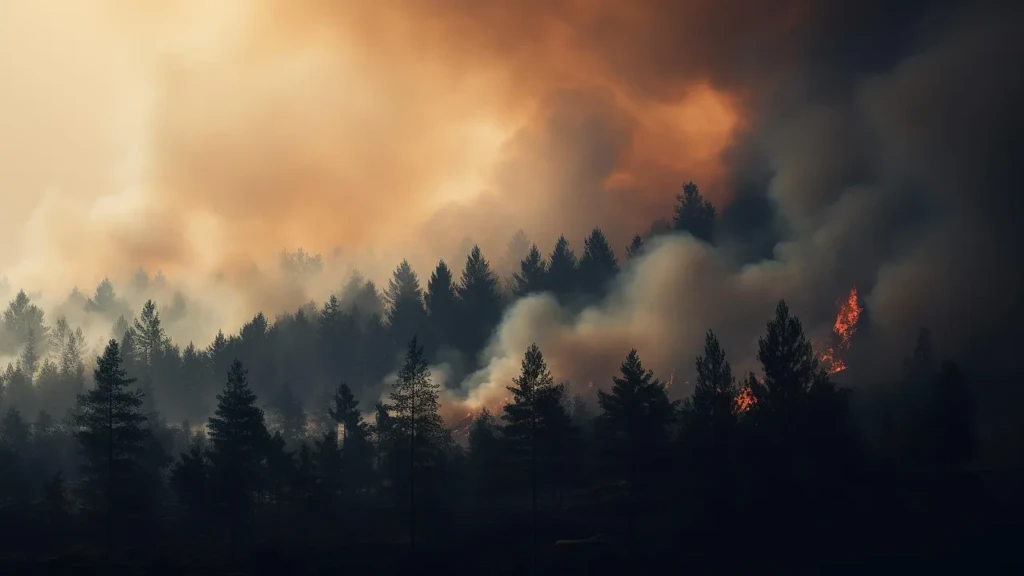
Even now, we are seeing the effects everywhere: record heat waves, intensifying storms, megafires, crop failures, flooding, and water shortages. These impacts are no longer distant warnings—they are today’s headlines. The atmosphere contains 50% more carbon dioxide than it did before the Industrial Revolution, and the world continues to emit over 36 billion metric tons of CO₂ each year.
We are not on track. Despite decades of pledges and policy efforts, global emissions have continued to rise. Some countries have made progress; others have not. But overall, the planet is still heating up, and greenhouse gas concentrations continue to climb.
This is where carbon dioxide removal (CDR) comes in.
What is carbon dioxide removal?
CDR refers to a wide range of approaches designed to pull excess carbon dioxide out of the air and store it safely for the long term—whether in trees and soils, in rock formations underground, or through products that lock away carbon in solid form.
Examples include:
- Restoring forests and wetlands that absorb carbon naturally
- Improving agricultural practices to increase soil carbon storage
- Spreading crushed minerals like basalt on farmland to speed up natural weathering
- Capturing CO₂ directly from the air using machines and storing it in deep geologic reservoirs
- Creating long-lived carbon-rich products like biochar or carbon-infused concrete
Importantly, carbon removal is not a substitute for cutting emissions. We must still do everything possible to stop burning fossil fuels, reduce methane and nitrous oxide emissions, and transition to cleaner ways of living and working.
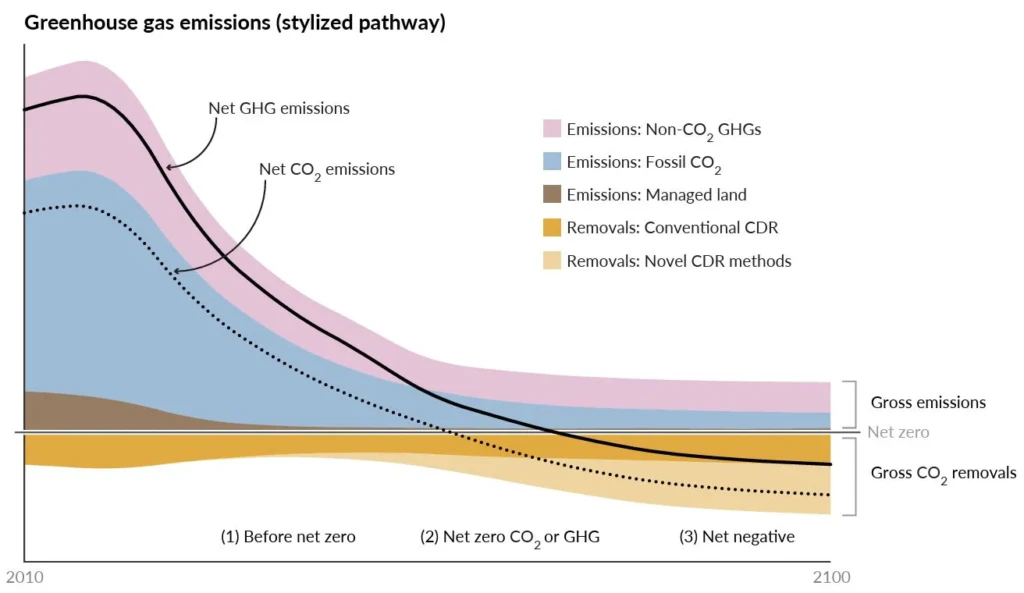
But even in the most ambitious climate scenarios—where emissions drop to near-zero quickly—we still need to remove billions of tons of carbon from the atmosphere to stay within safe climate boundaries. This is not a loophole. It’s a scientific necessity.
Why do we need CDR?
There are three major reasons:
- We’ve overshot the safe zone. Even if emissions stopped today, the planet would still be too hot. Removing excess CO₂ helps us gradually bring temperatures back down over time.
- Some emissions are hard to eliminate. Sectors like aviation, shipping, cement, and agriculture will take time to decarbonize fully. CDR helps balance out these “residual” emissions as we transition.
- We need to prepare for the long term. Climate stability isn’t just about reaching net zero—it’s about staying there. In the future, CDR may help manage risks from carbon cycle feedbacks or recover from climate overshoot if temporary warming exceeds critical thresholds.
According to the Intergovernmental Panel on Climate Change (IPCC), nearly all scenarios that keep warming under 1.5°C or even 2°C include large-scale carbon removal alongside rapid emissions cuts. Yet today, we are removing less than 0.1% of what is likely needed by mid-century. Most carbon removal today comes from forests—but many of these gains are insecure or short-lived, especially in the face of worsening wildfires and land pressures.
We need to scale up—and fast.
How can this be done responsibly?
Not all carbon removal is created equal. To make a real difference, CDR must be:
- Real and durable, storing carbon for decades or longer
- Verifiable, with clear data and public accountability
- Equitable, respecting communities, ecosystems, and land rights
- Additional, not replacing emissions cuts or other climate solutions
CDR is not a magic fix, but if pursued with care and integrity, it can be a powerful tool for climate repair.
A moment for global focus
That’s why a growing number of climate scientists, governments, and advocacy groups are calling for urgent international coordination on CDR. We can’t afford to leave this part of the climate strategy to fragmented private efforts or uncertain markets.
The Vancouver Process will help. It is a permanent coalition of government experts and institutions, who–working alongside stakeholders from industry, research, and other stakeholder groiups—will focus on developing improved government information sharing and cooperation on CDR infrastructure development.
What Comes Next
The climate crisis is a problem we created together—and solving it will require every tool we have. Carbon removal is one of those tools. It won’t solve everything, but without it, we can’t solve enough.
As the world prepares for the coming decades, we face a choice: wait and react, or act with intention. With the right leadership, investment, and public engagement, CDR can become a force not just for climate repair, but for justice, resilience, and renewal.
By the Numbers
The State of CDR
The State of CDR (2nd ed) is the most authoritative accounting of where we are and what needs to be done. Compiled annually by dozens of the world’s leading CDR researchers, this report makes abundantly clear that the road ahead is both urgent and challenging.
Taking Action
CDR comes in many shapes and sizes. This recent report is one of the best at describing the opportunities and challeges of CDR by type and region. See the resources section of this site for more reading.
Roads to Removal
Roads to Removal is a highly detailed but at the same time very accessible analysis of the cost and potential capacity for US-based CDR. Led by a team of researchers at the Lawrence Livermore National Laboratory, this report evaluates the feasibility, capacity, impacts, and costs of most leading CDR methods, including forest management, managed cropland soils, biomass carbon removal and storage (BiCRS), and direct air capture (DAC).