

Research, demonstration & innovation
EU-funded marine CDR measurement project begins
The four-year MAR-CO2 project began on August 1 with nearly €6 million in EU funding through Horizon Europe. The project is developing measurement and reporting approaches for marine carbon dioxide removal, including methods for quantifying additionality and durability and assessing ecological risks, co-benefits and governance. Source: European Commission CORDISDemand & procurement
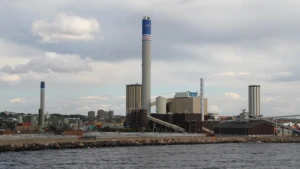
Sweden closes second bio-CCS reverse auction
Sweden’s second reverse auction for bio-CCS closed on August 13 with SEK 10.17 billion available. The program supports investment and operating costs for the capture, transport and permanent geological storage of biogenic CO₂ generated in Sweden. Successful projects must begin delivering stored CO₂ within four years of the award, and operating support can continue for up to 15 years. Source: Swedish Energy AgencyMarkets & incentives
U.S. GAO reviews administration and oversight of 45Q
On August 6, the U.S. Government Accountability Office released a review of the federal 45Q carbon-oxide sequestration tax credit. The credit applies to qualifying carbon captured at emissions sources or directly from the air and subsequently stored or used. GAO found gaps in federal evaluation and oversight, including the absence of a designated agency responsible for measuring the credit’s overall performance, and made recommendations to Congress, the IRS and Department of Energy. Source: U.S. Government Accountability Office
Rules, standards & MRV
Australia introduces carbon-credit integrity and transparency bill
On August 20, the Australian government introduced the Carbon Credits and Other Legislation Amendment (Integrity and Transparency) Bill 2026 in the House of Representatives. The legislation proposes changes to the Australian Carbon Credit Unit Scheme and related laws intended to strengthen integrity, transparency, accountability and scheme administration. As of the end of August, the bill remained before Parliament. Source: Parliament of Australia
Australia consults on changes to soil-carbon crediting method
Australia sought public feedback in August on proposed changes to its soil-organic-carbon sequestration methodology under the ACCU Scheme. The proposed changes include a cap on credited soil-carbon stock changes and revised sampling guidance intended to ensure conservative crediting and compliance with the scheme’s legislated Offsets Integrity Standards. Source: Australian Department of Climate Change, Energy, the Environment and Water
Infrastructure & permitting
Brazil establishes national framework for CO₂ transport and geological storage
Brazil issued Decree No. 13,095 on August 12, regulating CO₂ capture, pipeline transport and geological storage under its 2024 legal framework. The decree assigns regulatory and authorization responsibilities and explicitly recognizes BECCS, DACCS, CCS and related routes. It also establishes principles covering permanence, traceability and additionality and encourages shared, multi-user CO₂ infrastructure. Source: Presidency of Brazil
No major new government action identified this month.
No major new government action identified this month.